

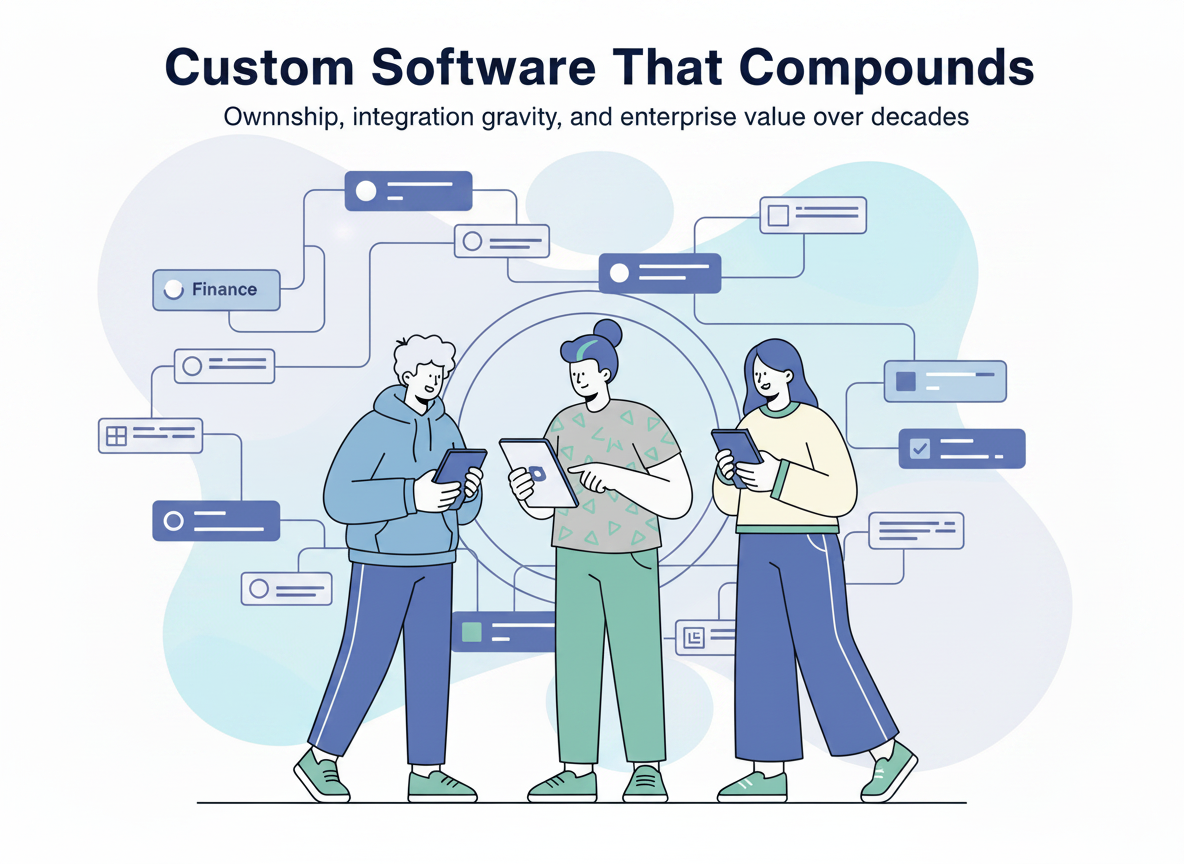
Custom Software Embeds Deep, Drives Ownership, and Compounds Enterprise Value for Decades.
Most enterprises don’t fail because they lack software. They fail because their software never becomes the way the business actually runs.
Custom software—when architected with intent—doesn’t simply “fit” into an organization. It sinks roots into the operational core and becomes the system through which the business thinks, decides, and scales. That’s the real distinction: short-term tooling versus long-term digital infrastructure.
Tooling solves tasks. Infrastructure shapes the enterprise.
Off-the-shelf platforms are often excellent at solving a defined problem quickly: CRM, ticketing, inventory, analytics, approvals. But they typically come with a hidden constraint: the enterprise must adapt its operating model to the tool.
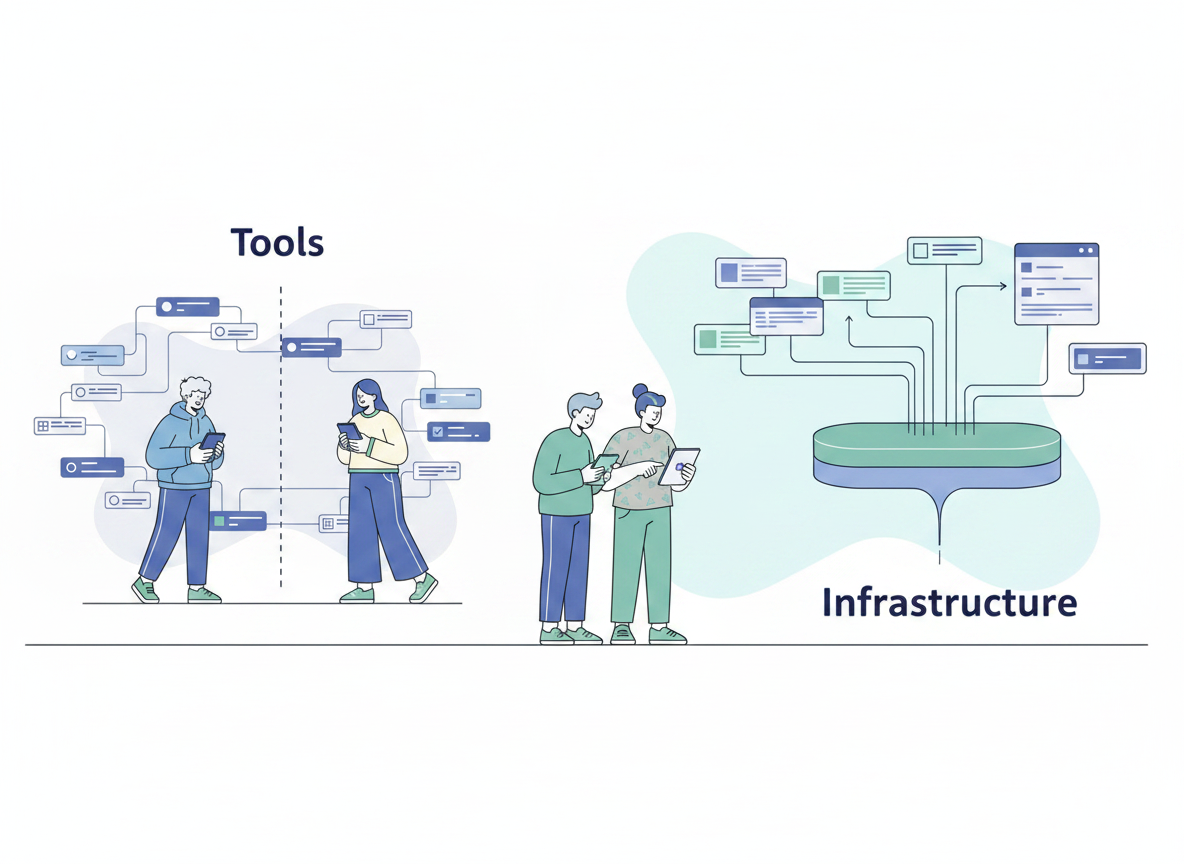
Custom software flips that relationship. The enterprise encodes its operating model into software—its workflows, data semantics, decision rules, exceptions, and governance. Over time, that software becomes less like an “app” and more like a living system: a durable foundation that supports new products, new markets, and new operating realities.
Beneath the UI: where custom systems embed
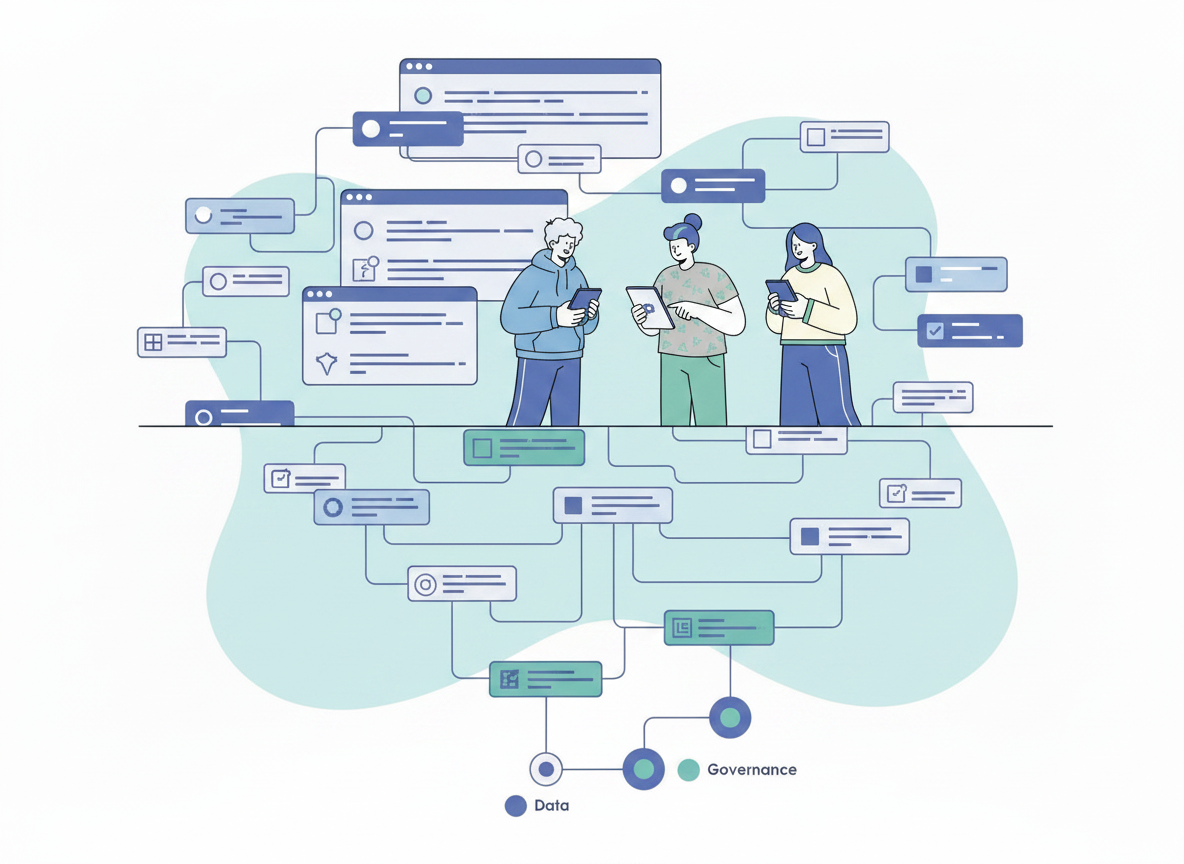
At the surface, software looks like an interface layer:
- Dashboards
- Workflows
- APIs
- Forms and approvals
But the real enterprise value sits underneath:
- Process orchestration: how work moves across teams and systems
- Data models: what the business considers “true” and how entities relate
- Decision logic: how policies, pricing, risk, and approvals are executed
- Auditability and governance: what happened, why, and who approved it

Well-designed custom systems map how orders flow, how inventory moves, how approvals happen, and how intelligence is derived. This is how a business turns operations into a repeatable machine.
Over time, this creates something powerful: a digital twin of the enterprise—tightly aligned with its unique operating DNA.
The CapEx mindset: software as a capital asset
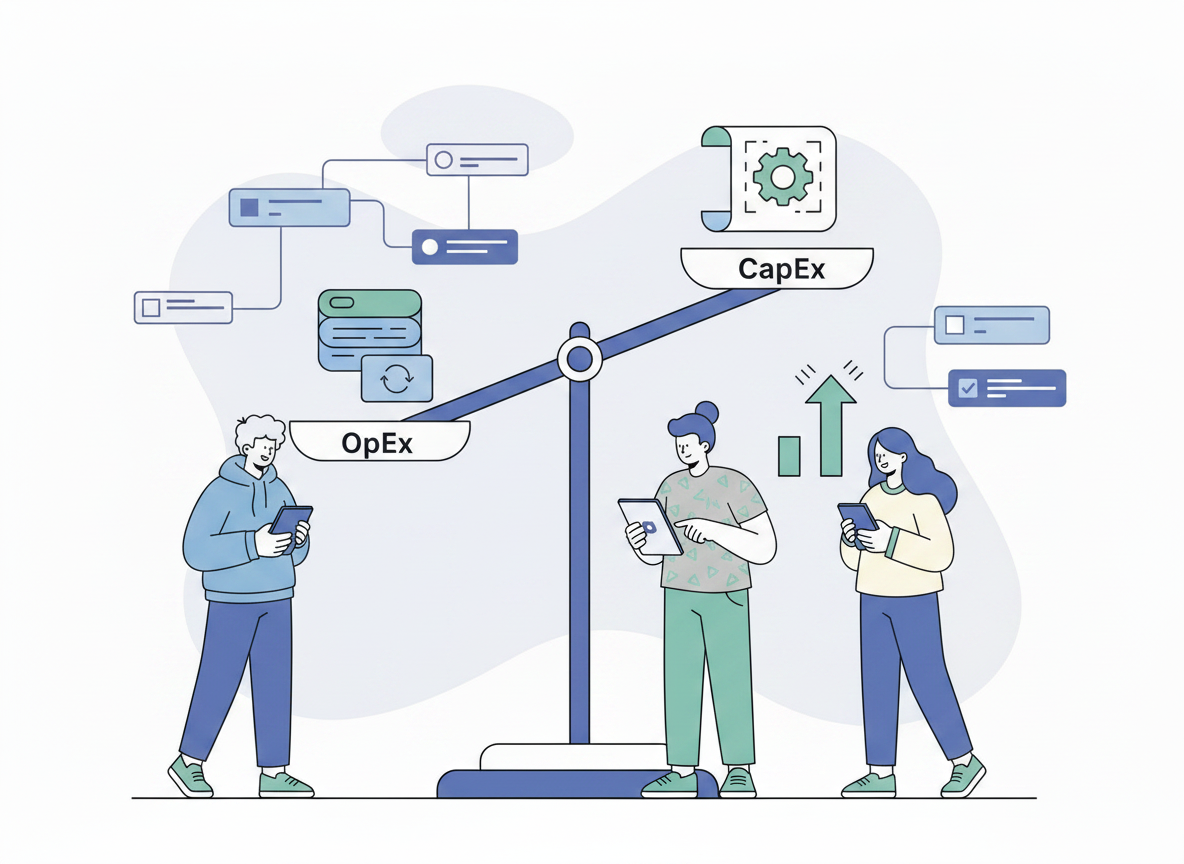
This is where financial thinking changes.
Many off-the-shelf tools behave like OpEx:
- Recurring subscription costs
- Replaceable vendors
- Roadmaps controlled externally
- Constraints that force workarounds
Custom software behaves more like CapEx:
- Owned and governed internally
- Evolved intentionally over time
- Extended strategically as the business grows
- Able to encode institutional knowledge
The enterprise isn’t just using software; it is building institutional memory in code.
That memory includes the hard-won lessons that rarely show up in vendor demos:
- Edge cases
- Exceptions
- Compliance constraints
- Customer-specific rules
- Operational shortcuts that should be automated
When captured correctly, these become reusable assets—not tribal knowledge.
Integration gravity: the compounding advantage
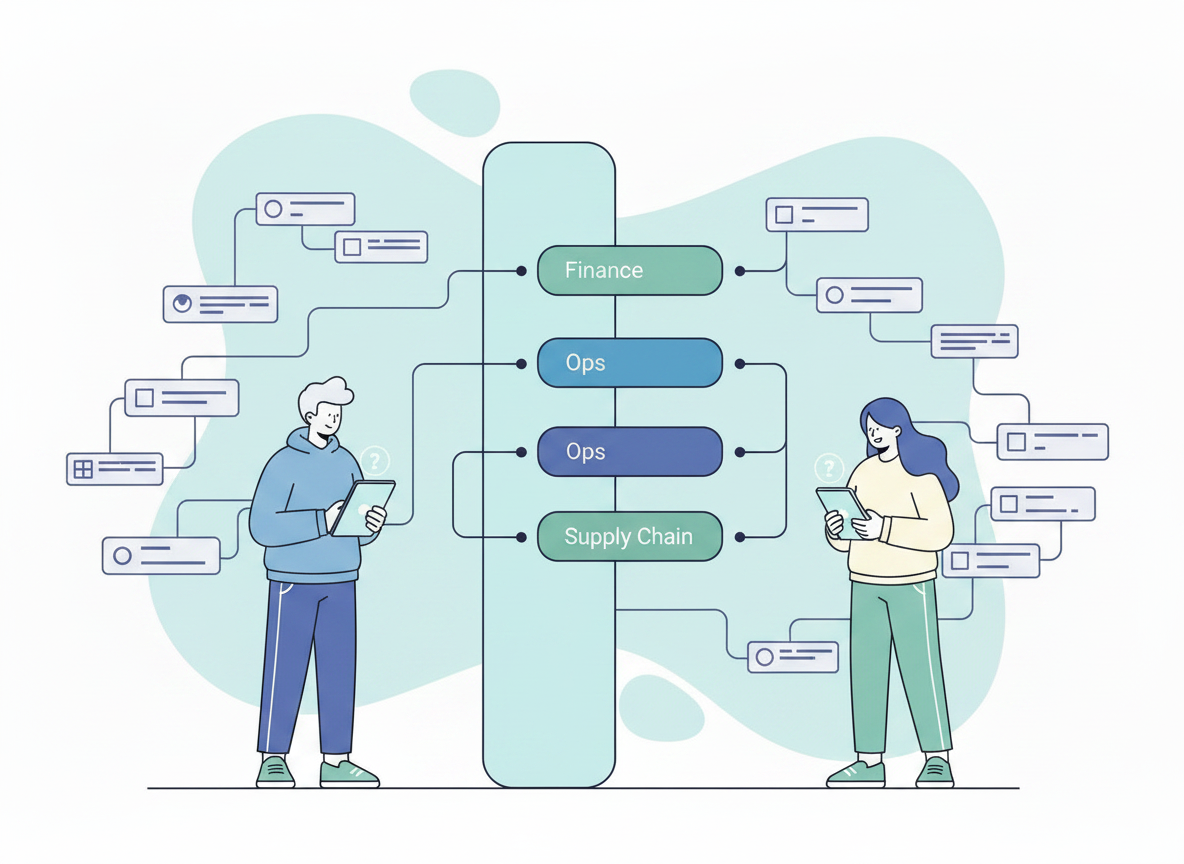
At Deventure.co, we believe long-term advantage comes from integration gravity.
Once a custom platform is embedded across departments—finance, operations, supply chain, customer experience—it becomes the natural anchor for future integrations.
Instead of each new tool creating fragmentation, new systems plug into a pre-defined architectural spine:
- APIs expose stable capabilities
- Event streams propagate changes in real time
- Modular services isolate domains and reduce coupling
The result is an ecosystem that gets stronger with every addition.
The decade effect: compounding enterprise value
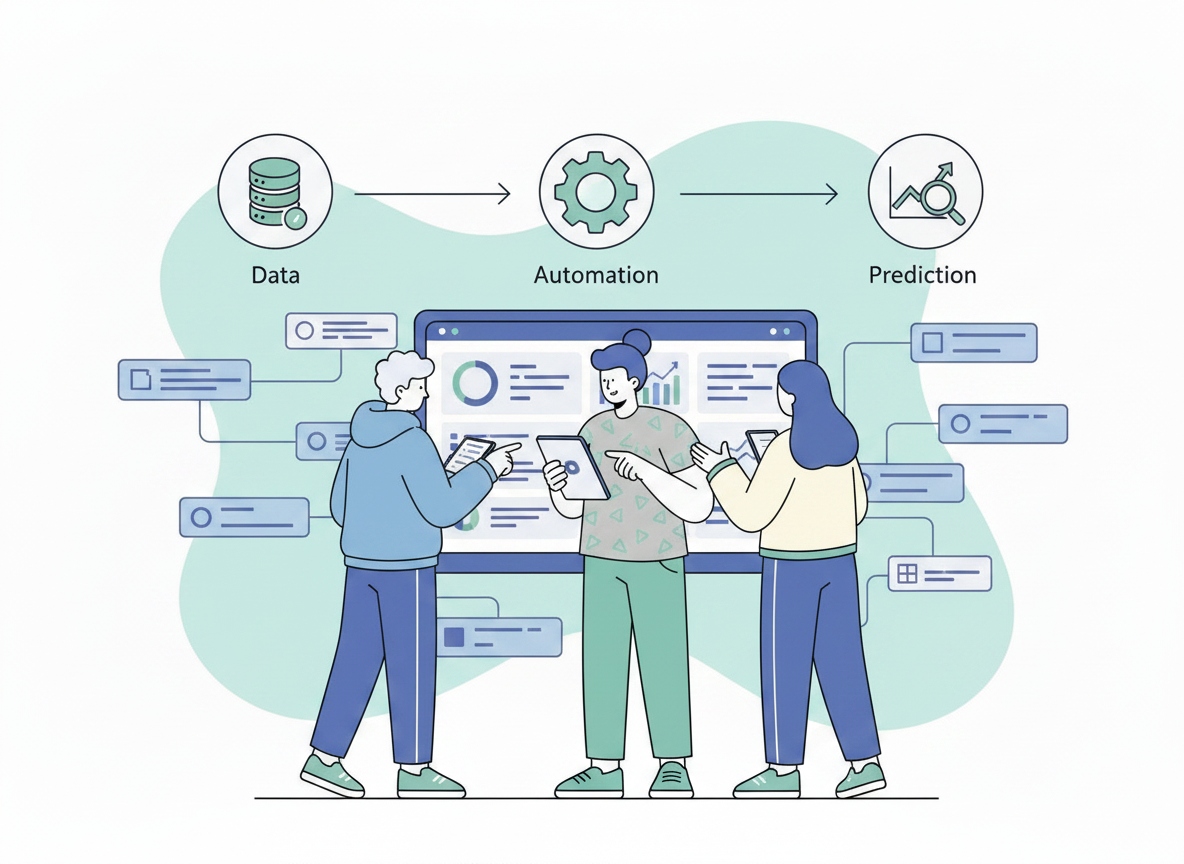
When custom software is treated as infrastructure, the benefits don’t just accumulate—they compound.
1) Data becomes richer and more contextual
Data quality improves when data is captured inside real workflows, not bolted on afterward. Context emerges naturally:
- Which customer action triggered the event?
- Which approval step caused delay?
- Which supplier change impacted inventory?
This context is what turns reporting into insight.
2) Workflows become more automated and intelligent
Once the system reflects how the enterprise truly operates, automation becomes safer and more valuable:
- Redundancies disappear
- Manual interventions decline
- Exceptions are handled explicitly
- Teams spend less time coordinating and more time executing
3) Decision-making becomes faster and more predictive
As data and workflow maturity increase, decision loops compress:
- From monthly reporting to near-real-time visibility
- From reactive firefighting to proactive forecasting
- From “what happened?” to “what will happen if we do X?”
This is where software stops being a cost center and becomes a strategic advantage.
The financial lens: CapEx strengthening and OpEx optimization
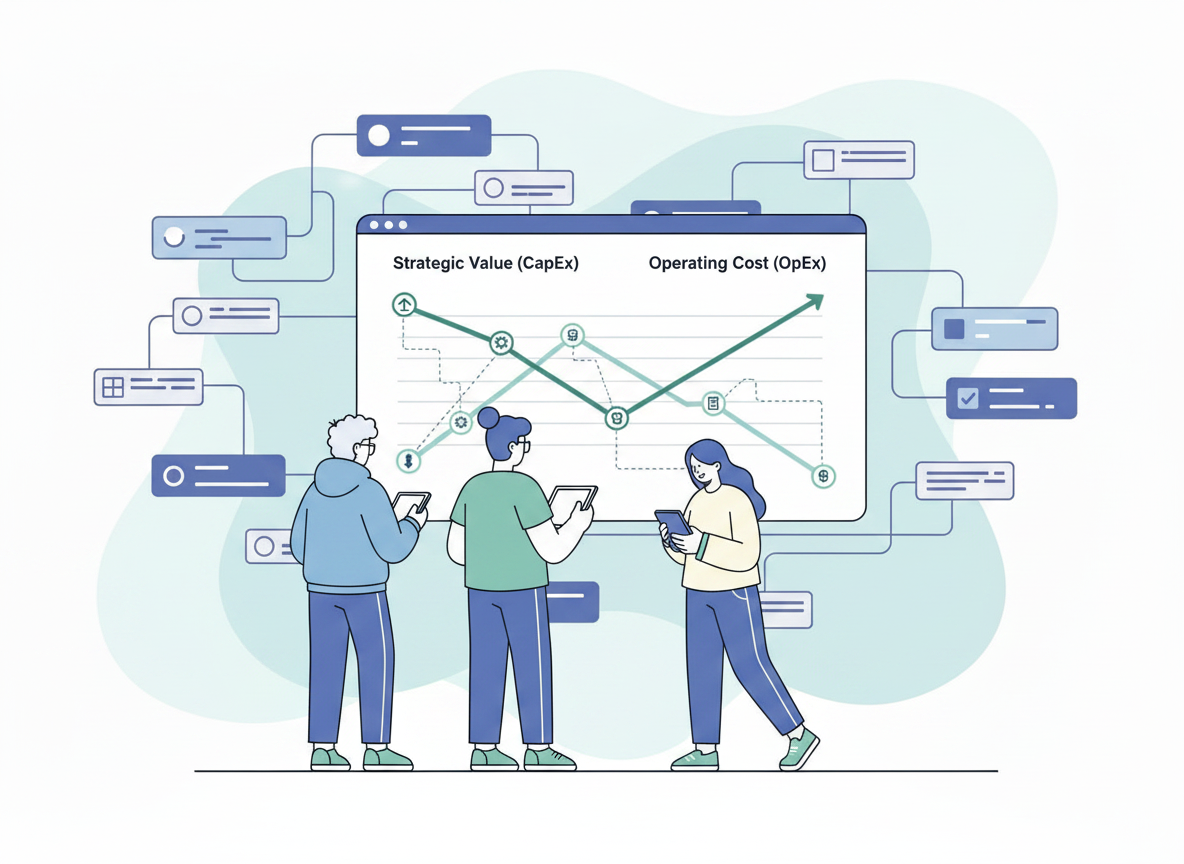
Compounding value shows up clearly in both CapEx and OpEx dynamics.
CapEx strengthening:
The software appreciates in strategic value over time because:
- Enhancements increase utility
- Integrations increase defensibility
- Accumulated data increases uniqueness
- Embedded domain logic becomes hard to replicate
In practical terms, the enterprise builds a platform that competitors can’t simply buy.
OpEx optimization:
Operational costs reduce as:
- Manual work declines
- Reconciliation and duplication disappear
- Coordination overhead drops
- Errors and rework decrease
The enterprise does more with less, consistently—without burning out teams.
Future-proofing: adapting without starting over
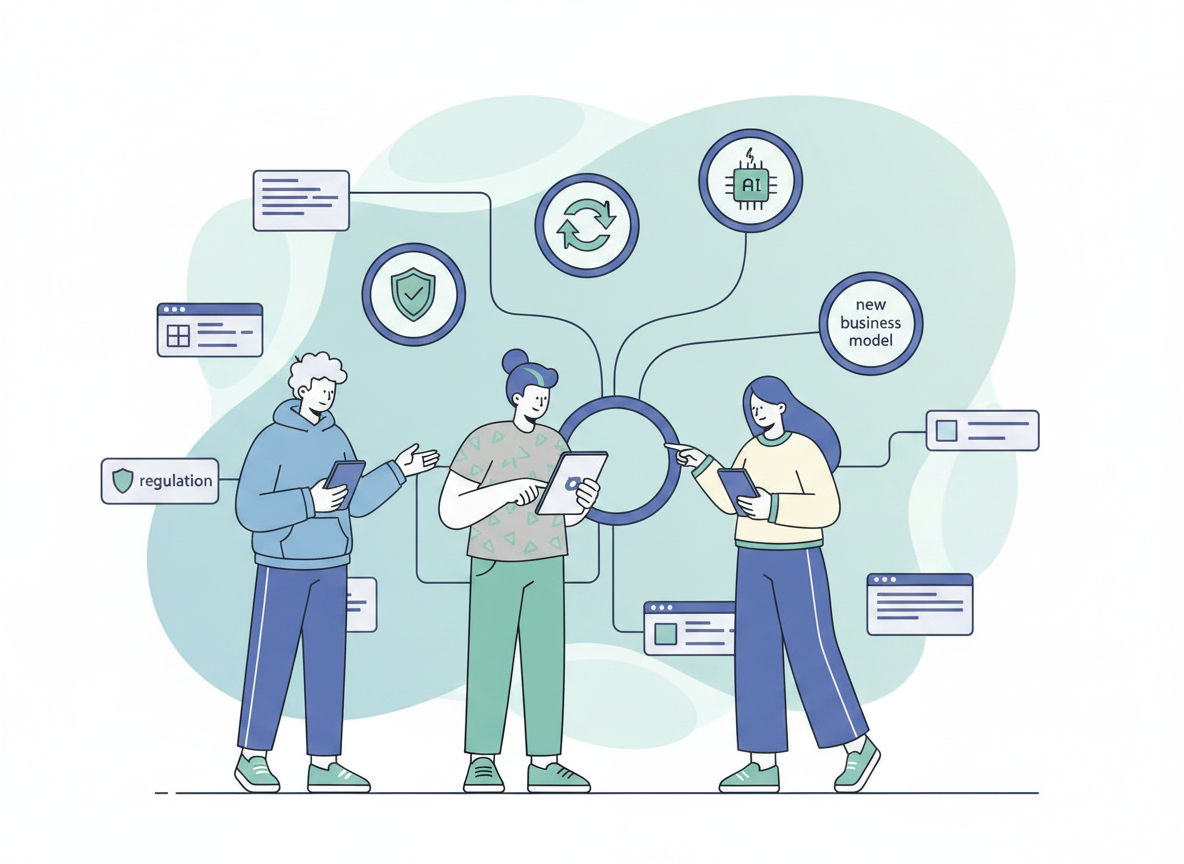
Market conditions shift. Regulations change. Business models evolve. New technologies emerge.
Enterprises with only external software ecosystems often face a painful choice:
- Wait for a vendor roadmap
- Patch workflows with brittle workarounds
- Replace systems and retrain teams
Enterprises that own their core platform have a different option: extend what they already own.
- Clear domain boundaries
- Strong data contracts
- Integration patterns that scale
- Governance that supports change safely
The deeper truth: rent capabilities or own evolution
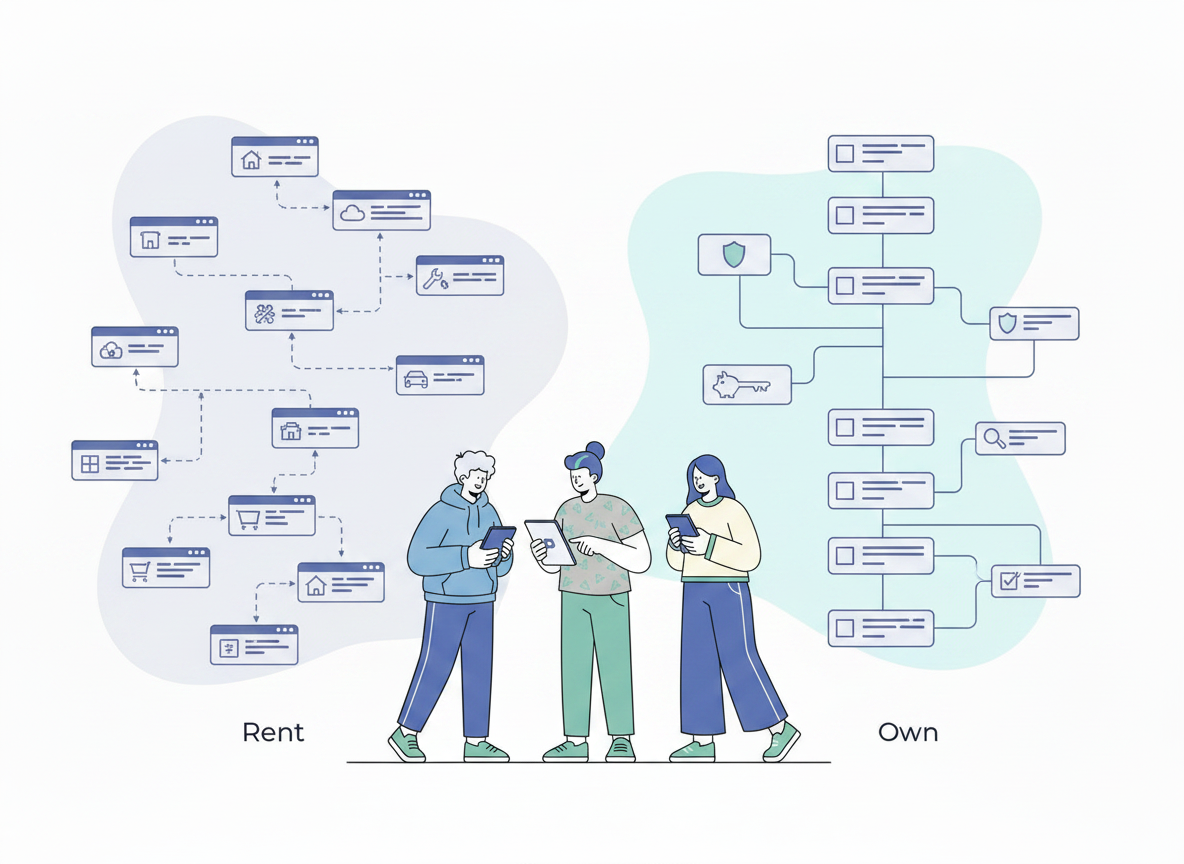
Enterprises that rely purely on external ecosystems often rent their capabilities.
Enterprises that invest in custom software own their evolution curve.
Over time, the difference becomes stark:
- One reacts to change.
- The other absorbs and shapes it.
Closing: Custom software is not a project
Custom software, when done right, is a long-duration strategic asset—one that embeds itself into the enterprise fabric, compounds in value, and quietly powers growth, resilience, and control for decades.
If you’re thinking about custom software, the key question isn’t “what features do we need?”
It’s:
- What parts of our operating DNA should we own?
- What should become our architectural spine?
- What do we want to compound over the next decade?
Because the enterprises that win long-term are rarely the ones with the most tools.
They’re the ones with the strongest infrastructure.